
Austin’s Sixth Street Entertainment District stretches from Congress Avenue to Interstate 35 in the heart of downtown, forming a dense corridor of historic storefronts, live-music venues, and restaurants that has shaped the city’s cultural identity for decades. On weekend evenings the street closes to vehicle traffic and fills with thousands of visitors — a pedestrian spectacle unlike almost anywhere else in Texas. Understanding what makes this district distinctive requires looking at both its layered history and the physical environment it has evolved into.
A Brief History of the District
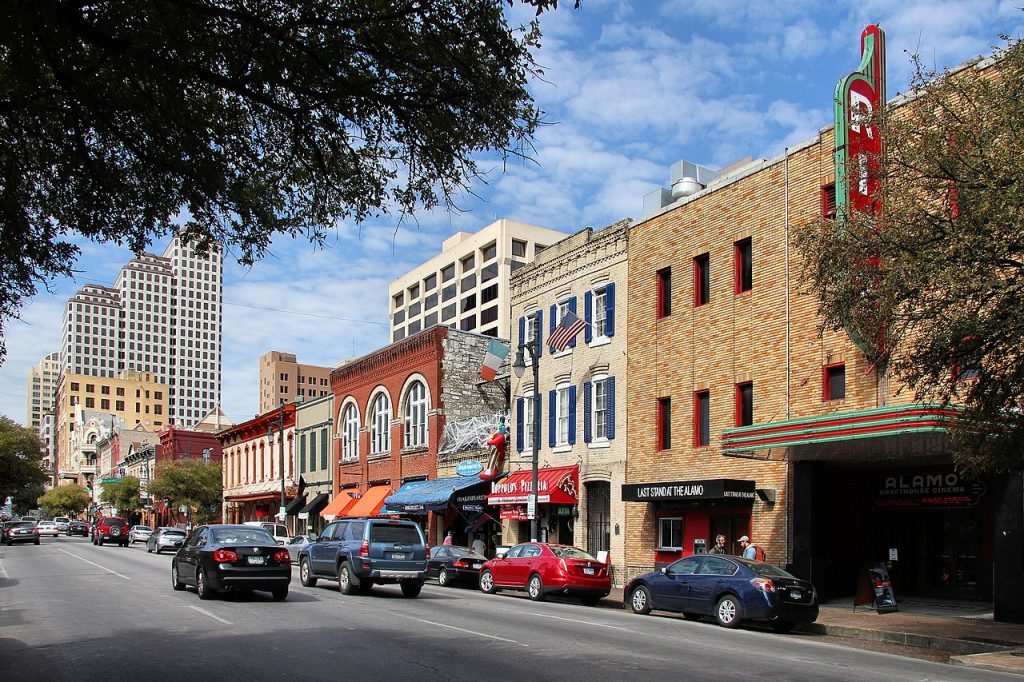
The stretch now known as Sixth Street was originally called Pecan Street during Austin’s early development in the 1830s and 1840s, when founders platted the city as the capital of the Republic of Texas. Commercial buildings constructed during the late nineteenth century gave the block its signature Victorian-era limestone and brick facades, many of which remain standing today. Preservation Austin has documented how the district’s built environment represents one of the most intact collections of nineteenth-century commercial architecture in the state.
By the mid-twentieth century the area had declined, hosting secondhand shops and vacant storefronts. Revival began in earnest during the 1970s as musicians, artists, and entrepreneurs moved in, drawn by low rents and the neighborhood’s character. That transformation accelerated after Austin formally embraced the “Live Music Capital of the World” identity — a designation the City of Austin has actively promoted since the early 1990s.
The Physical Landscape and Visual Character
The district divides into two informal zones locals recognize immediately. The eastern portion — often called “Dirty Sixth” — runs from Congress Avenue to Red River Street and concentrates the densest clustering of bars and outdoor patios. The western stretch transitions toward the Warehouse District, carrying a quieter character with galleries and cocktail bars occupying converted industrial buildings.
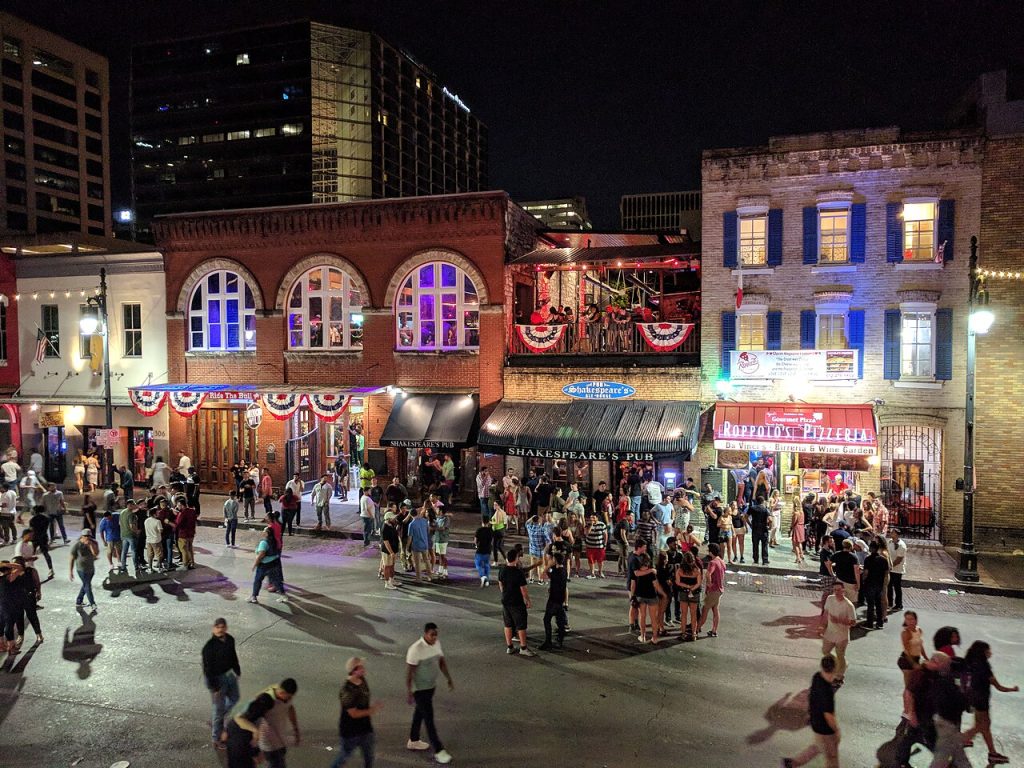
Neon signage, limestone facades, and dense foot traffic create a layered environment that shifts dramatically between day and night. At dusk, venue marquees and string lights begin to dominate, while architectural details — cornices, arched windows, decorative brickwork — recede into the background. Austin’s subtropical climate shapes how visitors experience the district: temperatures regularly exceed 100°F during summer, pushing activity into the late evening hours from June through August, while mild winters allow comfortable outdoor gatherings well into the night.
Peak Times and Seasonal Patterns
The street sees its heaviest pedestrian traffic on Friday and Saturday nights between 10 p.m. and 2 a.m., when the city authorizes road closures on the main block. Major annual events intensify this further: South by Southwest (SXSW) in March transforms the district into one of the world’s most concentrated festival environments, while Austin City Limits Music Festival (ACL) in October draws international crowds each weekend.
Seasonal conditions at a glance
- Spring (March–May): SXSW peaks activity; warm days with occasional severe thunderstorms typical of Central Texas.
- Summer (June–August): Extreme heat limits daytime visits; the district comes alive after 9 p.m. when temperatures drop.
- Fall (September–November): ACL Festival draws large crowds; pleasant evenings make this the most comfortable season.
- Winter (December–February): Thinner weekday crowds but active on weekends; rare Austin ice events can disrupt outdoor gatherings.
Light, Atmosphere, and Visual Opportunity
Few urban corridors in the American South combine ambient neon, historic texture, and human energy the way Sixth Street does after dark. The mix of incandescent venue lighting, LED signage, and warm street lamps creates conditions that shift across just a few blocks. The locally quarried limestone buildings absorb and reflect light differently than brick or glass, giving the district a warmer, more textured quality than newer entertainment corridors in Dallas or Houston.
“Millions of annual visitors make Sixth Street one of the highest-traffic pedestrian zones in Texas — and a constantly shifting visual environment.”
Austin’s visitors bureau reports the district draws millions of people each year, making it one of the highest-traffic pedestrian zones in the state. That volume creates a constantly shifting scene — moments of stillness between performances, surges of movement when venue doors open, the interplay of costume and crowd that defines Austin’s expressive nightlife culture.
Architecture, Murals, and Landmarks
The Paramount Theatre at 713 Congress Avenue anchors the western edge with its 1915 Beaux-Arts facade. Walking eastward, hand-painted murals grow more frequent — Austin’s public-art culture reaches its highest density in and around Sixth Street, with commissioned works on side walls, alleys, and utility boxes throughout the corridor. The Austin Arts Commission has recognized the broader downtown zone as culturally significant, shaping infrastructure investments in lighting and wayfinding over the past decade.
The Red River Cultural District adjoins the eastern end of Sixth Street and has developed its own identity as a home for independent venues and music clubs, extending the entertainment corridor well beyond the main strip.
Getting Around the District
The full stretch from Congress to I-35 covers about eight walkable city blocks. City-operated parking garages sit on surrounding streets, and CapMetro runs bus routes along Congress Avenue and several cross streets. The district connects on foot to the Rainey Street Historic District to the south and to the Austin Convention Center just east of Red River Street.
Street performers, food trucks, and spontaneous outdoor concerts from venue sound systems layer onto the district’s sensory environment. Unlike planned entertainment complexes built from scratch, Sixth Street has grown organically over 150 years — and that accumulation of eras, textures, and intentions makes it one of Texas’s most visually compelling urban corridors.