
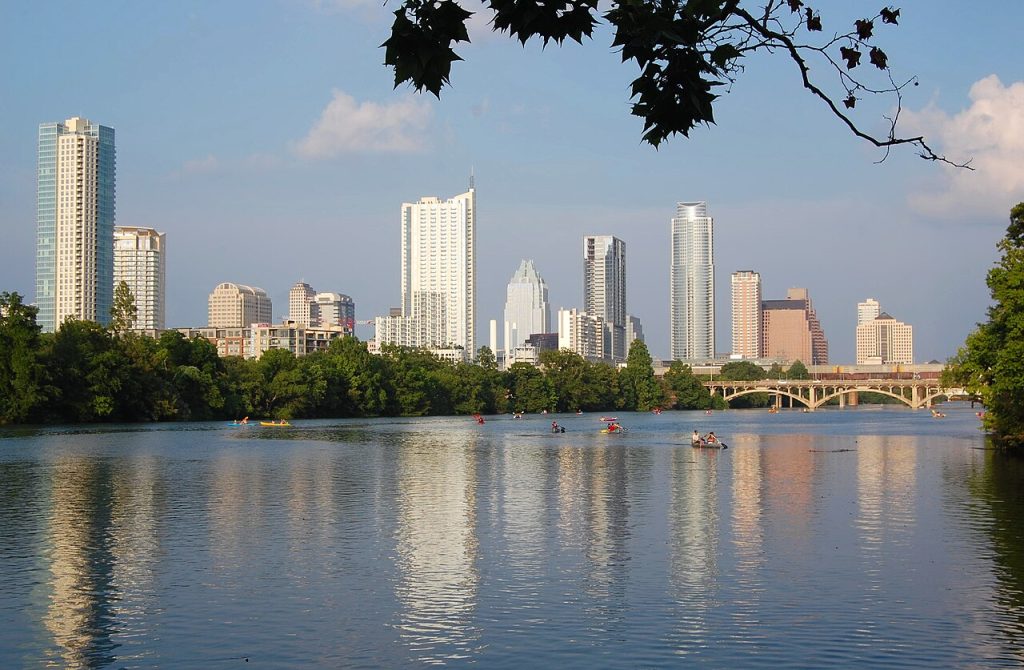
Lady Bird Lake sits at the center of Austin, Texas, offering a stretch of open water framed by limestone bluffs, cypress trees, and a downtown skyline that has become one of the city’s most photographed backdrops, from street level to architectural photography taken along its banks. Unlike a natural lake, it is a reservoir formed by a dam on the Colorado River, and it has shaped how Austin residents live, exercise, and connect with nature for more than six decades. Understanding its history, ecology, and rules helps residents use the lake safely while appreciating why it remains one of the most valuable natural spaces in Central Texas.
From Colorado River to Urban Lake
Lady Bird Lake was created in 1960 when the City of Austin, working with the Lower Colorado River Authority, completed Longhorn Dam and impounded a five-mile stretch of the Colorado River through downtown, according to a state historical archive of the lake’s origins. For decades afterward, residents knew it simply as Town Lake, and the reservoir served primarily as a flood-control feature alongside its recreational role. The lake was renamed in 2007 to honor Lady Bird Johnson, whose conservation advocacy helped inspire the beautification of its shoreline, including Auditorium Shores, a landscaped stretch of the south bank added during the city’s early beautification efforts.
That shoreline transformation matters because the lake was never intended purely for recreation. It also functions as a water-management feature, regulating flow along the Colorado River as it moves through the city. Barton Creek feeds into the lake from the south, adding a spring-fed water source that behaves differently from the rest of the reservoir.
Life Above and Below the Water
Beneath the surface, Lady Bird Lake covers roughly 468 acres and reaches a maximum depth of about 18 feet, figures documented in state fisheries data. The lake supports largemouth bass, catfish, sunfish, and common carp, making it a popular fishing destination within city limits. Anglers can catch and release dozens of bass in a single outing, a sign of a healthy, well-balanced fish population.
The lake’s ecosystem is not without challenges. Zebra mussels, an invasive species that spreads by attaching to boats and gear, have been confirmed in the reservoir, prompting boaters to clean and dry equipment before moving between water bodies. Eurasian watermilfoil, an aquatic plant that can crowd out native vegetation, also grows along parts of the shoreline. Because Barton Creek stays relatively warm through winter, it creates a refuge where fish and other aquatic life remain active even during cooler months.
Central Texas Climate and the Lake’s Seasonal Character
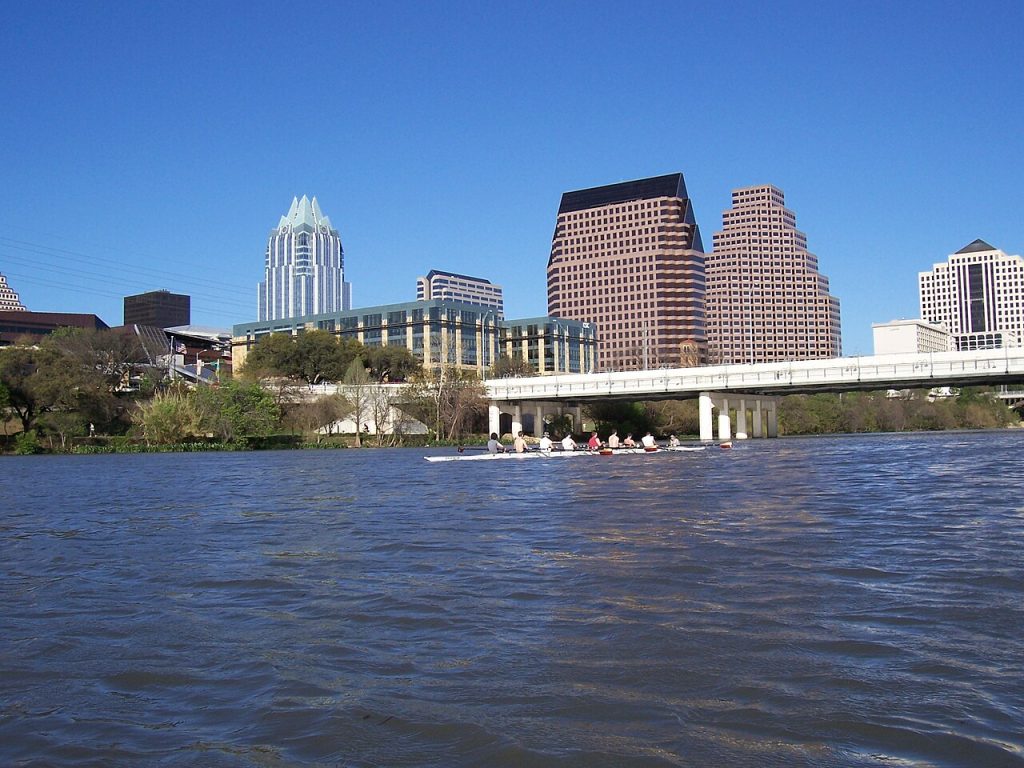
Austin’s climate directly shapes how residents experience Lady Bird Lake throughout the year. Long, hot summers push water-based recreation, such as paddling and rowing, into early mornings and evenings when temperatures are more tolerable. Mild winters, by contrast, keep the lake accessible for exercise and wildlife viewing nearly year-round, unlike reservoirs in colder regions that freeze or close seasonally.
This climate pattern also affects water conditions. Warm temperatures combined with nutrient runoff can encourage algae growth in slow-moving sections of the lake, which is part of why regional water-quality monitoring remains an ongoing effort. Seasonal rainfall variability, common to Central Texas, can likewise cause the lake’s clarity and flow to shift noticeably between wet and dry periods.
Rules That Keep the Lake Safe and Healthy
Because Lady Bird Lake sits within Austin’s park system, it is governed by specific local ordinances designed to protect both people and the ecosystem. These rules cover several key areas:
- Swimming, wading, or bathing in the lake is prohibited, except during rescue efforts.
- Children under 13 must wear a U.S. Coast Guard-approved personal flotation device (PFD), a wearable safety device commonly known as a life jacket, at all times on the water.
- Adults must keep a properly fitted PFD readily accessible while on any vessel.
- Gas-powered motors are banned; only electric motors of five horsepower or less may be used.
- Jumping or diving from any bridge crossing the lake is illegal, as is fishing from a bridge deck.
These restrictions exist largely because the lake sits in a dense urban corridor, where boat traffic, bridge crossings, and pedestrian activity overlap closely. The no-swimming rule, in particular, reflects concerns about water quality and the volume of watercraft using the same narrow channel.
A Trail for the Whole City
Encircling most of the lake is a hike-and-bike trail that has become one of Austin’s most heavily used pieces of public infrastructure, and a favorite vantage point for aerial photography of the skyline and shoreline together. It connects downtown neighborhoods to green space without requiring a car, giving residents a car-free route for commuting, exercise, or simply observing the lake’s wildlife. Turtles, herons, and other waterfowl are common sights along the banks, particularly in early morning hours.
The trail and the lake together illustrate a broader point about urban natural resources: they require active management to remain both safe and ecologically functional. Ongoing monitoring of invasive species, water quality, and boating regulations helps ensure Lady Bird Lake continues serving Austin residents much as it has since the 1960s, as a working reservoir that still feels like a genuine natural retreat within city limits.